
UProperty.sg New Launch Intelligence
Zyon Grand: CDL, Mitsui Fudosan and the Meaning of Integrated Living
A history-led and buyer-readiness review of the Zion Road land story, the CDL–Mitsui partnership, Singapore’s first long-stay SA2 component, direct MRT access and the practical questions buyers should still examine.
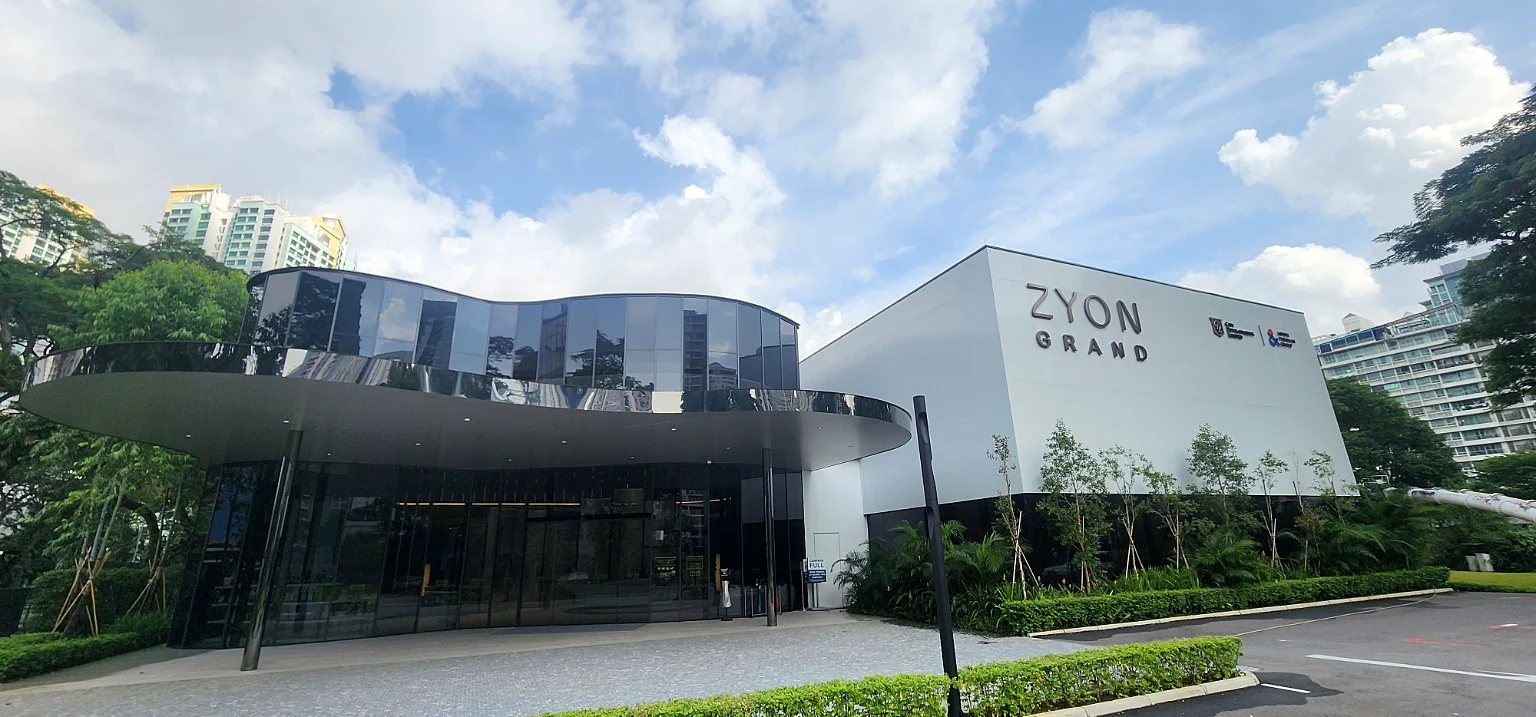
During my visit to the Zyon Grand sales gallery, the most meaningful takeaway was not simply the scale of the twin towers or the presentation of the show units. The more important story is how the development brings together private residences, long-stay serviced apartments, shops and dining, an early childhood development centre and direct access to Havelock MRT within one planned site.
That makes Zyon Grand a useful case study in how Singapore’s integrated developments are evolving. It is also a project shaped by two long-established developers: City Developments Limited, founded in Singapore in 1963, and Mitsui Fudosan, which entered the Singapore market in 1972.
Zyon Grand Project Snapshot
The official project information describes a mixed-use site with 1,079 residential and long-stay serviced-apartment units in total, supported by commercial and community uses and direct access to Havelock MRT station.
| Location | 3, 5, 7 and 9 Kim Seng Road, near the River Valley precinct. |
|---|---|
| Residential component | 706 condominium units in two 62-storey towers, from one-bedroom-plus-study homes to larger five-bedroom units and penthouses. |
| Long-stay component | 373 long-stay serviced apartments under URA’s Serviced Apartments II framework, housed in a separate 36-storey tower. |
| Commercial component | Zyon Galleria, planned to include restaurants, a supermarket and supporting commercial uses. |
| Community use | An early childhood development centre is included within the integrated site. |
| Transport | Official project materials state direct access to Havelock MRT station on the Thomson–East Coast Line. |
| Development team | Joint development by CDL and Mitsui Fudosan; design by Nikken Sekkei in collaboration with ADDP Architects. |
What “Integrated Development” Means at Zyon Grand
In property marketing, the word integrated can be used too loosely. For buyers, the practical question is not whether several uses appear on one brochure. It is whether those uses are physically and operationally planned to make everyday life more convenient while controlling privacy, access, traffic and management complexity.
At Zyon Grand, integration operates at several levels. The first is transport integration: the development is planned with direct access to Havelock MRT. The second is daily-needs integration: residents can potentially access food, groceries and selected services without making a separate trip. The third is housing integration: private ownership sits alongside a professionally managed long-stay rental component on the wider site.
The role of the long-stay serviced apartments
URA describes Serviced Apartments II, or SA2, as a pilot long-stay rental housing typology. SA2 accommodation must be rented for a minimum of three months, remain under single ownership and cannot be strata-subdivided. This is materially different from a privately owned condominium unit being individually rented out by its owner.
For the wider precinct, the SA2 component may support longer-term residents such as professionals on assignments, relocating households or people needing flexible accommodation for several months. For condominium buyers, however, the correct approach is to assess both opportunity and operational reality.
Possible everyday advantages
- Direct rail access can reduce last-mile friction.
- On-site grocery, dining and community uses may improve convenience.
- A broader resident and visitor base may support commercial activity.
- Professional management of the SA2 component may create a more structured long-stay ecosystem.
Questions buyers should verify
- How are resident, visitor, retail and SA2 access routes separated?
- What are the security, loading and vehicle-circulation arrangements?
- Which costs and facilities are shared, and which are separately managed?
- Will commercial activity remain useful without weakening residential privacy?
The Zion Road Land Story: Why the S$1.106888 Billion Tender Matters
URA awarded Zion Road Parcel A to the CDL–Mitsui entities in April 2024 for S$1,106,888,000. The 99-year leasehold site has an official area of 15,277.9 sqm and a maximum permissible gross floor area of 85,557 sqm. At least 20,000 sqm of GFA had to be allocated to long-stay serviced apartments.
Based on URA’s tender figure, the land rate works out to approximately S$1,202 per sq ft per plot ratio. This is a useful starting reference, but it is not the final cost of producing and selling the development. Construction, financing, professional fees, PPVC execution, landscaping, infrastructure, marketing, risk allowances and developer margin all sit above the land cost.
The planning condition is equally important. The land was not sold simply for another standalone condominium. The requirement for a substantial SA2 component shaped the site into a more complex mixed-use development from the beginning. In other words, integration is part of the land and planning story, not merely a branding layer added later.
CDL: More Than Six Decades of Singapore Development
City Developments Limited was founded in 1963 and is one of Singapore’s long-established listed property groups. Mitsui Fudosan’s official project release states that CDL operates across 29 countries and 168 cities, has developed more than 53,000 residential units and has a substantial global portfolio spanning housing, commercial property and hospitality.
Its hospitality platform through Millennium Hotels & Resorts is relevant to the Zyon Grand story. A project that combines private homes, a long-stay serviced-apartment tower, commercial uses and direct transport access requires more than conventional condominium development experience. It requires coordination across residential planning, hospitality-style operations, mixed-use circulation and long-term asset management.
What CDL contributes
- Local market, regulatory and large-project execution experience.
- Residential development and mixed-use planning capability.
- Hospitality and serviced-accommodation operating knowledge.
- Experience working with transport-connected and city-centre sites.
What buyers should still assess
- Final specifications and actual delivered finishes.
- Maintenance planning for a large, complex development.
- Separation of residential and non-residential operations.
- Defects handling, handover and long-term estate management.
Mitsui Fudosan: Over 50 Years in Singapore
Mitsui Fudosan entered Singapore in 1972. Its October 2025 announcement described the Zion Road project as its 44th Singapore project, its 26th joint project with CDL and its first large-scale mixed-use flagship development in Singapore.
This history matters because Zyon Grand is not the product of a first-time partnership assembled only for one land tender. The two groups have worked together repeatedly, building familiarity in product planning, business promotion, execution and risk sharing.
Mitsui Fudosan’s broader approach is often associated with large-scale neighbourhood creation, mixed-use placemaking and long-term asset thinking. At Zyon Grand, that influence can be read in the attempt to combine architecture, landscape, residential life, commercial activity and the long-stay component as one coherent urban environment.
Why the CDL–Mitsui Partnership Is Central to the Story
The partnership brings together complementary strengths: CDL’s long Singapore operating history and hospitality platform, and Mitsui Fudosan’s product-planning and placemaking experience. The official project release describes Zyon Grand as the 26th collaboration between them in Singapore.
The real test of the partnership will not be the launch gallery. It will be the completed development: the clarity of resident circulation, the operation of the commercial podium, the quality of the landscaped environment, the management of the SA2 tower, the relationship with the MRT connection and the maintenance burden over time.
For buyers, developer history is therefore best used as a confidence factor, not as a substitute for examining the Sale and Purchase Agreement, plans, specifications, maintenance estimates, financing and unit-level suitability.
Architecture, Construction and Sustainability
Zyon Grand is designed by Nikken Sekkei in collaboration with ADDP Architects. According to CDL, the façade takes inspiration from the Vanda Miss Joaquim orchid, while the composition of the three towers references Ikebana, the Japanese art of flower arrangement.
The twin residential towers are planned at approximately 240 metres and 62 storeys. CDL states that, when completed, they are intended to become the world’s tallest twin-tower residential development constructed using Prefabricated Prefinished Volumetric Construction, or PPVC. Because this is a future completion claim, it should be presented as a developer-stated intended distinction rather than as an already achieved record.
Mitsui Fudosan also states that the project is planned to pursue Green Mark Platinum Super Low Energy certification. BCA explains that the residential Super Low Energy standard recognises best-in-class buildings achieving at least a 60% improvement in energy efficiency over 2005 levels.
Design intent
- Slender high-rise towers forming a new skyline marker.
- Orchid-inspired façade expression.
- Ikebana-inspired relationship among the three towers.
- Greenery and water features intended to soften the urban setting.
Practical buyer questions
- How do unit orientation and façade design affect heat and glare?
- How efficient are the layouts after accounting for structural and service zones?
- What are the long-term maintenance implications of high-rise common facilities?
- How will lift capacity perform during peak periods?
My Zyon Grand Sales Gallery Photo Story
The following photographs were taken during my sales gallery visit. They help document the project narrative, but showflat displays, scale models, furniture, views and finishes remain illustrative. Buyers should verify dimensions, inclusions and specifications against the latest official documents.
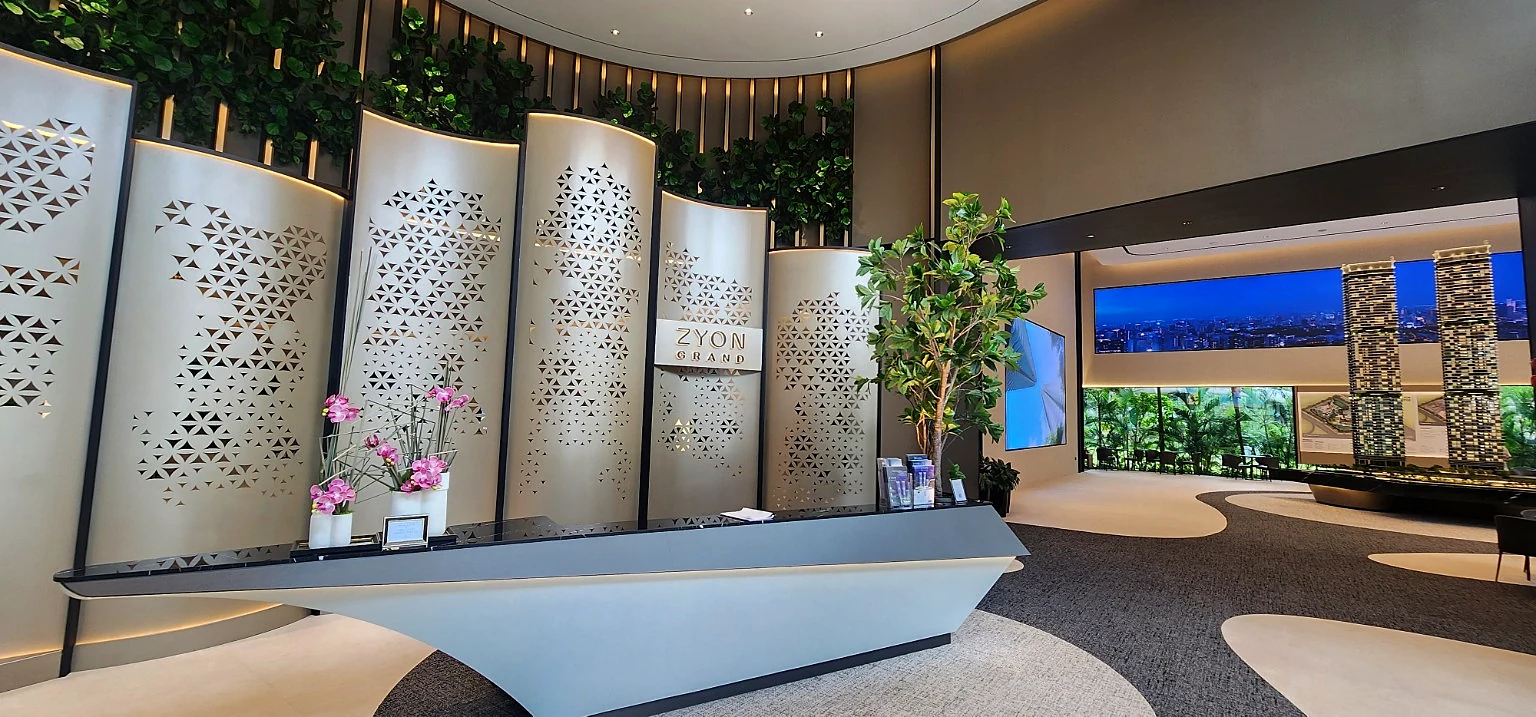
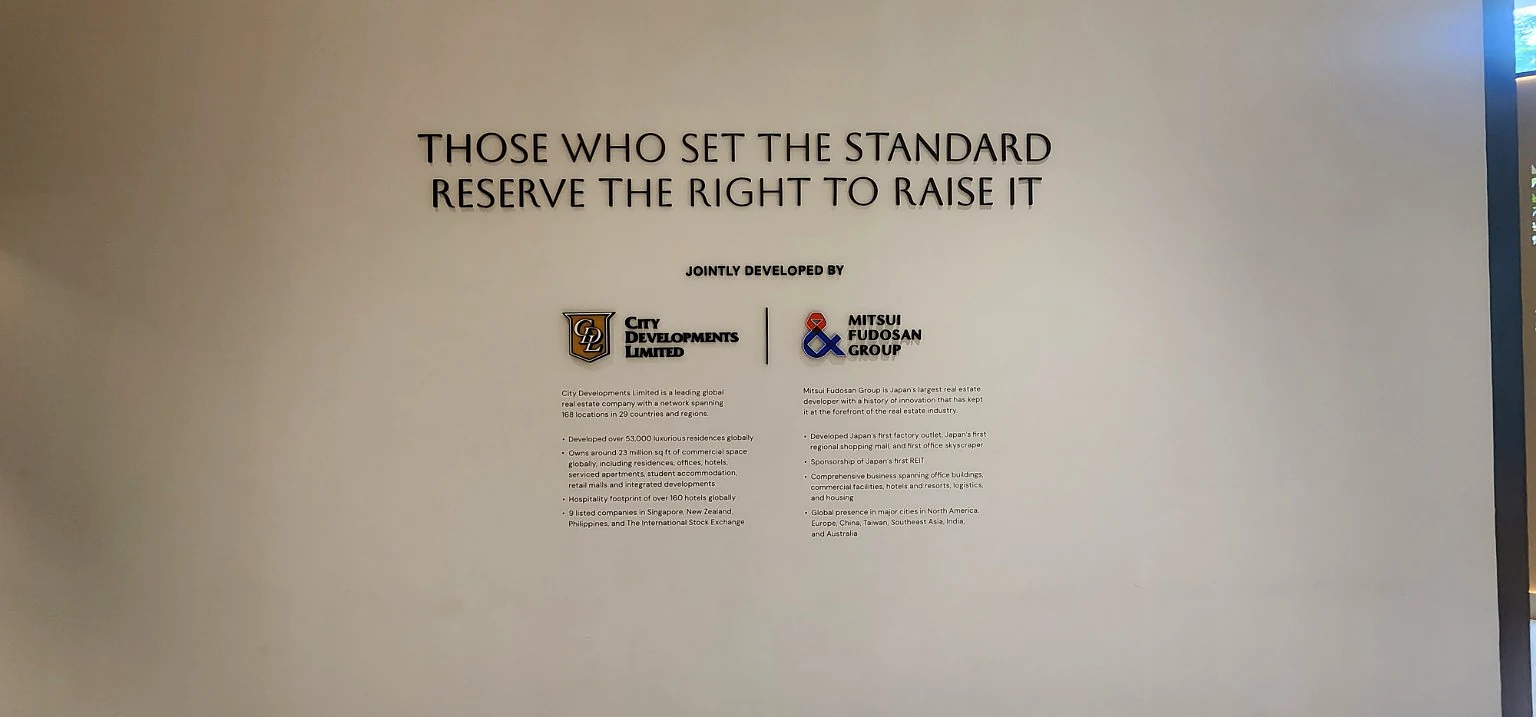
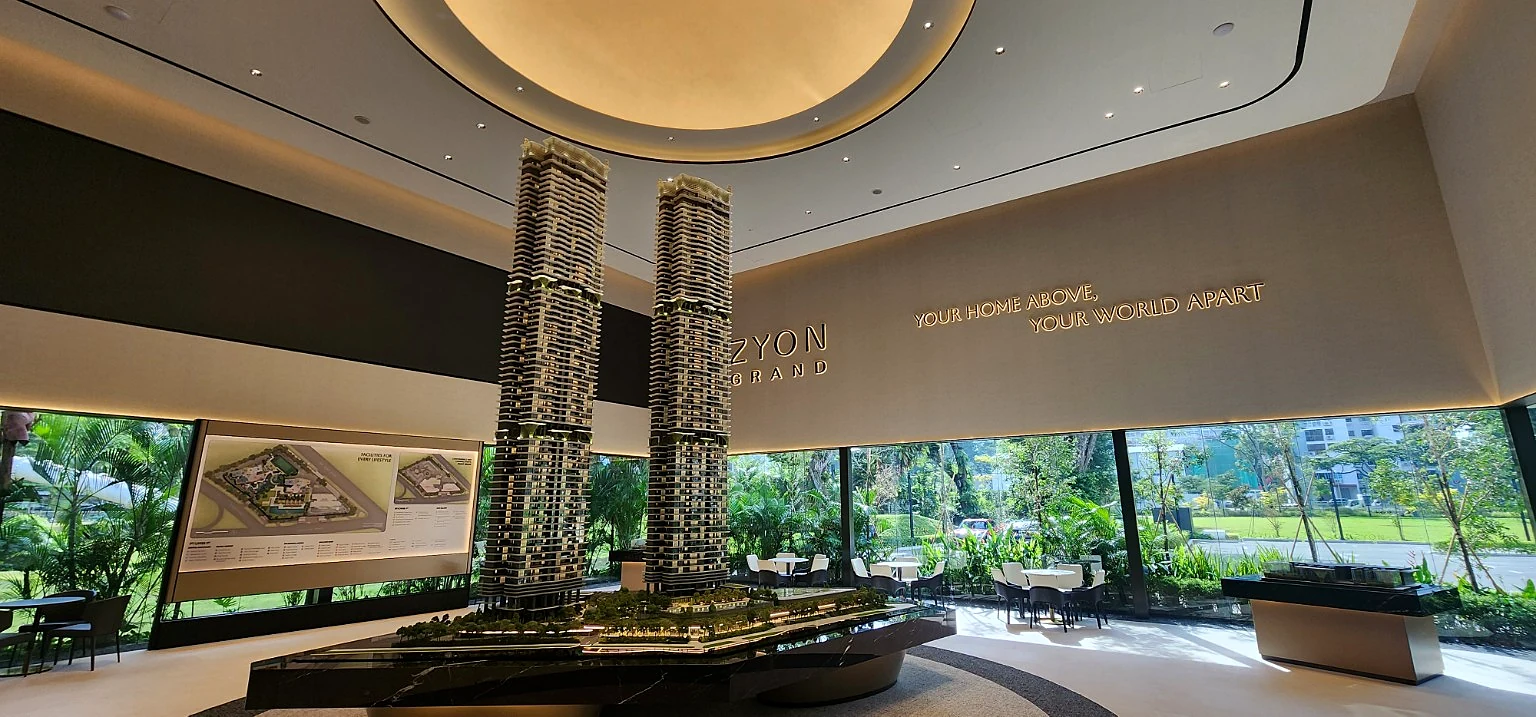
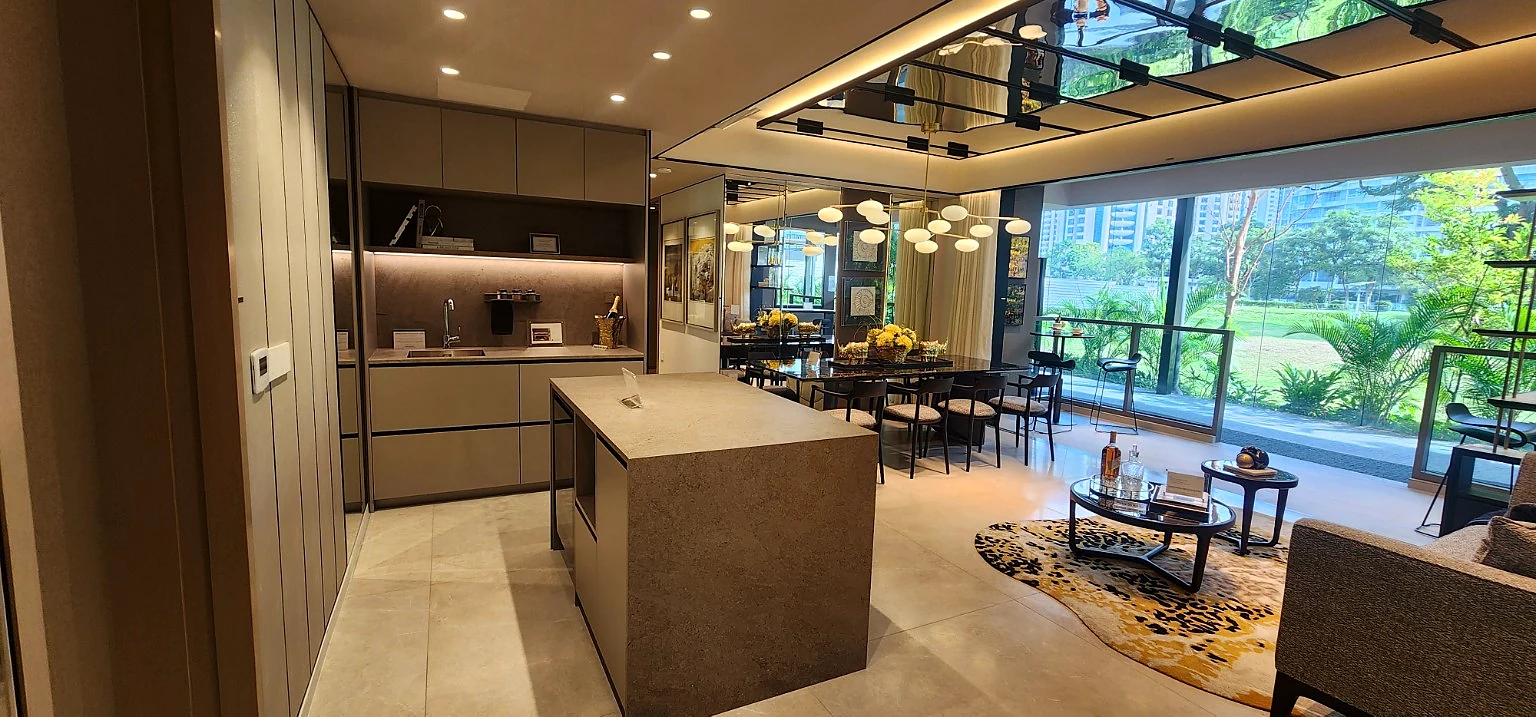
Photography: Andrew Koh / UProperty.sg. Image enhancement is limited to clarity, colour balance and web optimisation. Project models, displays, and show units are presentation materials and may not accurately represent the completed development.
Who May Find the Integrated Concept Relevant?
Zyon Grand may appeal to buyers who value direct rail connectivity, city-fringe convenience, high-rise living and access to everyday amenities within the same development. However, suitability should be assessed at the level of the individual household and unit, not only at the project level.
Owner-occupier lens
- Does the unit layout work for real daily routines and storage needs?
- Is the high-rise environment suitable for the household?
- Will the direct MRT access meaningfully reduce commuting friction?
- Are the integrated commercial uses genuinely useful to the family?
- Are privacy, noise and vehicle circulation acceptable for the chosen stack?
Investor and future-exit lens
- Who is the realistic rental audience for the selected unit type?
- How might the SA2 component complement or compete with private rental supply?
- What resale buyers are likely to afford the future quantum?
- What competing new launches and resale projects may be available at TOP?
- Can the buyer hold through vacancy, interest-rate and market-cycle changes?
Integrated does not automatically mean undervalued
Direct MRT access and on-site amenities can support convenience and buyer interest, but they do not remove price risk. Buyers should compare the specific purchase quantum, floor level, orientation, layout efficiency, maintenance cost and financing structure against nearby resale options and competing new launches.
The SA2 component should be analysed calmly
The long-stay serviced apartments are a distinctive feature, but neither automatic benefit nor automatic disadvantage should be assumed. Their influence will depend on management quality, access separation, tenant profile, commercial activation and how the completed precinct operates over time.
Holding power remains central
Progressive payments during construction can make a new launch feel more manageable before completion. Buyers should still test affordability based on the eventual full mortgage, maintenance fees, property tax, insurance, renovation, vacancy risk and a prudent interest-rate assumption.
Final UProperty View
Zyon Grand deserves attention because it brings together several important Singapore property themes in one development: a major Government Land Sales site, a long-running Singapore–Japan developer partnership, direct rail access, a substantial commercial and community component, and the first long-stay serviced apartments under the SA2 framework.
The strongest editorial angle is therefore not simply “luxury twin towers near MRT”. It is the evolution of integrated living: how private ownership, professionally managed long-stay accommodation, everyday services, transport, and high-density urban design can coexist within a single planned precinct.
For buyers, the project’s scale and developer history may support confidence, but the decision still has to return to fundamentals: unit suitability, price discipline, affordability, maintenance, privacy, rental assumptions, future competition and holding power. A landmark development can still be the wrong purchase for an individual buyer if the numbers or lifestyle fit do not work.
References and Source Notes
- URA: Tender award for Zion Road Parcel A — official land award, tenure, site area, GFA, tender price and minimum SA2 GFA.
- CDL: Zyon Grand launch announcement — project composition, architecture, transport access, design team, PPVC statement and launch information.
- Mitsui Fudosan: Zion Road project announcement — partnership history, Singapore project count, unit breakdown, site uses, sustainability intent and estimated completion.
- URA: Serviced Apartments II guidelines — definition, minimum three-month stay, single ownership and non-strata requirements.
- BCA: Singapore Green Building Masterplan — Super Low Energy context and residential energy-performance benchmark.
- UProperty.sg Editorial and Compliance Standards — verification-first and non-guarantee publishing approach.
Last reviewed: 16 July 2026. General information only. No capital appreciation, rental yield, sales result, financing approval, eligibility outcome or transaction outcome is guaranteed. Verify current project information with official sources and the latest developer-appointed materials.