
UProperty.sg · Independent commentary
How Many Homes Are Enough?
Property wealth, family legacy and Singapore’s future
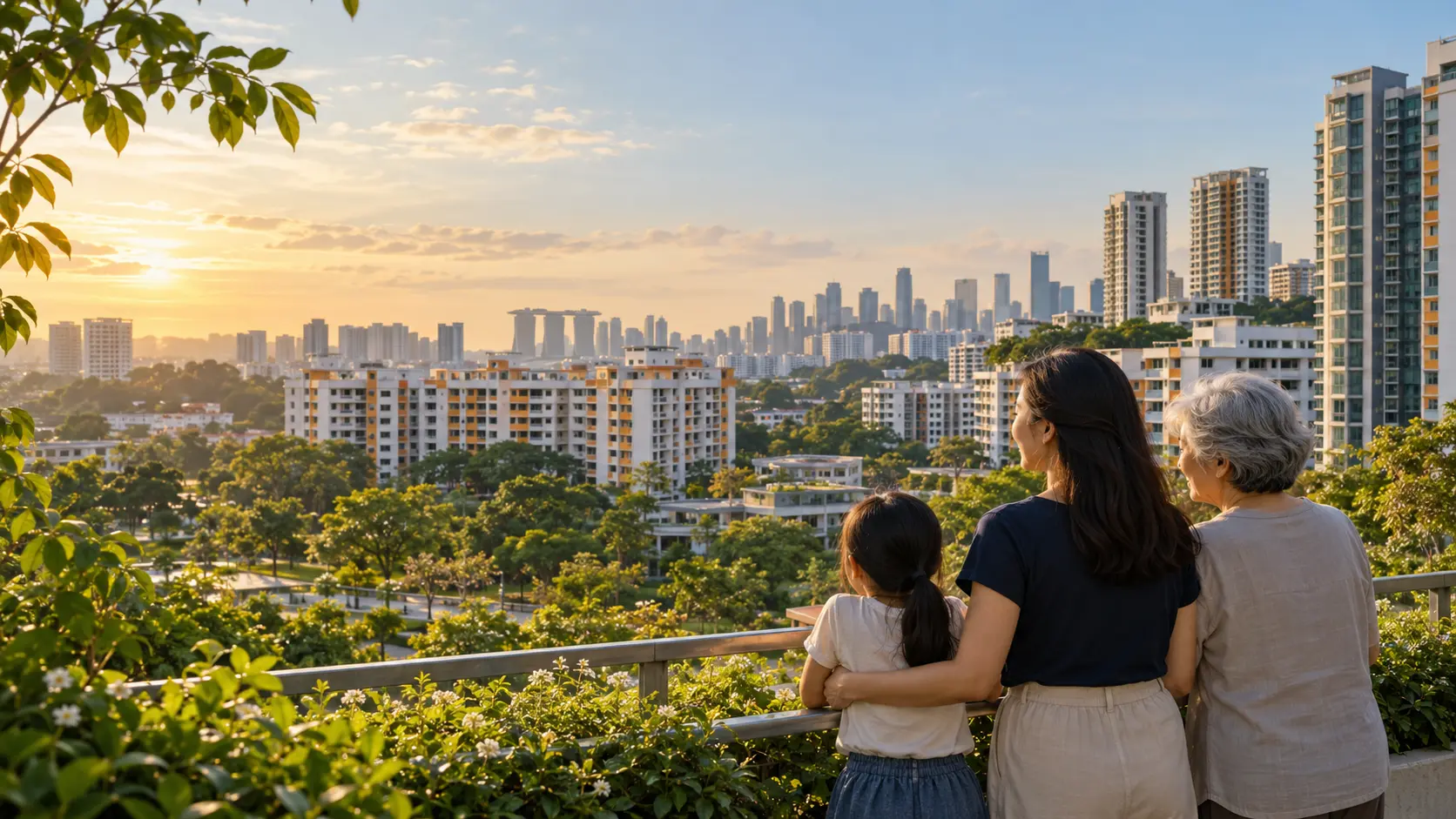
A successful property decision should help us live well: a suitable home, financial resilience, room for health and care needs, and a legacy that gives our families clarity.
As a property professional, I believe our advice should begin with what a household needs and can sustain. Sometimes the right decision is to buy. Sometimes it is to hold, sell, right-size or recognise that we already have enough.
That is why I welcome the discussion raised by MPs Elysa Chen and Shawn Loh in Parliament on 6 October 2026. Their contributions invite us to consider how substantial residential property wealth should contribute to Singapore’s future and whether accumulating more homes should remain a measure of personal success. [1] [2]
What was proposed and what applies today
CNA’s parliamentary coverage reports that Elysa Chen called for a study of a progressive holding tax on multiple investment residential properties. Separately, Shawn Loh suggested considering an inheritance tax for high-value properties to address wealth inequality. [1] [2]
Mothership reported both contributions in its coverage of the debate. A holding tax concerns continued ownership; inheritance taxation concerns wealth transferred at death. The two approaches serve related but different purposes. [3]
Singapore already has significant taxes on residential property. The standard Additional Buyer’s Stamp Duty (ABSD) rates for Singapore citizens are 20% for a second residential property and 30% for third and subsequent properties, subject to applicable reliefs or remissions. These are acquisition taxes, separate from annual property tax. [9]
Ordinary non-owner-occupied residential properties face progressive annual property tax rates from 12% to 36%. These are marginal rates applied to bands of Annual Value—the assessed annual rental value, not the property’s selling price. Owner-occupied homes receive a different, concessionary schedule. [10]
The relevant question is therefore whether the existing combination achieves the right outcomes, and whether additional measures could improve fairness without creating greater costs elsewhere.
What should property wealth help us achieve?
I am concerned when public conversations about property focus mainly on how many homes someone owns. A portfolio can be financially successful while leaving its owner short of cash, exposed to debt or poorly prepared for retirement and care.
I understand why a household may want a second property for rental income or future family needs. But two homes should never become a universal retirement target. Some families are better served by one suitable home and diversified savings.
My personal starting point is that third and subsequent investment homes deserve greater scrutiny and potentially a greater tax contribution. Yet property count alone is an incomplete measure of wealth. A small inherited interest in several homes differs substantially from full ownership of a large portfolio; one exceptionally valuable investment home can exceed the value of several modest units.
A fair system should examine the scale, use and concentration of property wealth alongside the number of homes. It should assess circumstances and consequences, rather than presume an owner’s motives.
“Property strategy means understanding what you need and making decisions that support long-term financial security, health, family wellbeing and a meaningful legacy.”
Andrew Koh · UProperty.sg
Different life stages, a shared need for a secure home
Housing policy reaches into everyday decisions: whether to start a family, live nearer ageing parents, rent while circumstances change or release funds for retirement. The illustrative situations below reflect needs a fair system should consider; they are not accounts of named individuals.
| Everyday situation | What the household needs | What a fair system should consider |
|---|---|---|
| A young couple buying their first home | A home within reach, manageable repayments and room to save for children and emergencies. | Suitable supply and affordability, so starting a household does not require taking on excessive debt. |
| A single adult building an independent life | A suitable home or reliable rental near work, transport and a support network. | Housing choices that recognise different household sizes, budgets and stages of life. |
| Parents raising children and caring for older relatives | Enough space, access to schools and care, and a move they can afford. | Practical moving arrangements and options near family, without treating every change of home as speculative accumulation. |
| A tenant seeking a stable place to live | Rent within budget, a well-maintained home and enough certainty to plan everyday life. | Adequate rental supply and the effect of ownership taxes on rents, maintenance and availability. |
| A retiree with a valuable home but limited cash | Funds for daily living and care, with the choice to stay or right-size. | Accessible housing, clear costs and carefully designed payment arrangements where appropriate. |
| An owner relying on one rental home for retirement income | Sustainable income after taxes, repairs and periods without a tenant. | A fair ongoing contribution, predictable rules and recognition that rental income is neither guaranteed nor cost-free. |
| Siblings inheriting shares of a family home | Clarity about who lives there, how costs are shared and whether to keep or sell. | Proportionate treatment of inherited interests and time to resolve estate matters, rather than assuming each beneficiary owns a whole investment home. |
These households may make different choices, but they share a need for security, manageable costs and room to adapt. In my view, a fair system should protect those everyday needs while asking substantial investment portfolios to contribute progressively. The question is whether the rules help people build a sustainable life at each stage.
A framework worth studying for Singapore
The Ministry of Finance has described property tax as Singapore’s primary means of taxing wealth and affirmed the importance of a fair and progressive tax-and-benefit system. IRAS explains that taxes support shared needs including healthcare, education, public transport and national defence. [5] [6]
I support those broad principles. The following are my recommendations for study, rather than an official policy blueprint or an assertion of endorsement by the Government or either MP.
1. Put access to suitable homes at the centre
Tax policy should work alongside adequate supply, transport connectivity, accessible housing and viable rental choices. MND’s June 2026 private housing supply announcement explicitly addresses both owner-occupier and rental demand. [11]
We should assess housing success through suitability and affordability. Expecting rapid appreciation for every existing owner while promising improving affordability for every new buyer creates competing objectives.
2. Preserve predictable ownership rights
Within applicable laws and tenure conditions, owners should have clarity about occupying, renting, selling and bequeathing their property. Tax assessments should be transparent and open to challenge through appropriate processes.
Ownership rights do not imply immunity from future taxes. Equally, crossing a property-count threshold should not automatically trigger a forced sale. I favour proportionate taxation and reasonable transition periods over a rigid two-home ceiling.
3. Examine substantial investment holdings as a whole
I would study a progressive annual surcharge on substantial residential investment portfolios, with the principal residence treated separately. Aggregate holdings and proportional beneficial interests could provide a fairer starting point than counting every partial ownership as a whole home.
Consistent treatment of direct ownership, companies and trusts would be essential. Any framework should resist artificial fragmentation, provide clear valuation rules and avoid rewarding excessive borrowing through unrestricted debt deductions.
A designated principal home could receive protection without an unlimited exemption for exceptionally valuable residences. Rates and thresholds should follow evidence, not an arbitrary number.
4. Study inheritance taxation separately
An inheritance proposal must first define who is assessed: the deceased’s estate, each beneficiary’s inheritance or the beneficiary’s combined holdings. An “inheritance tax from the third property” leaves that crucial question unanswered.
A high-threshold estate-based approach is one option worth examining because it can assess assets before distribution. However, a property-only tax could encourage wealth to move into other assets. Its scope, avoidance risks and interaction with lifetime gifts would require careful study.
The history is instructive. MOF’s 2010 Budget explanation said the former estate duty disproportionately affected middle and upper-middle income groups compared with wealthier groups, and contrasted it with property tax’s greater resistance to tax planning. [12] Any new system should address that weakness.
Possible safeguards include spousal deferral, proportionate assessment of shared interests and payment arrangements for beneficiaries with limited cash. These are proposed design considerations, not current exemptions.
5. Coordinate taxes and protect rental availability
ABSD moderates acquisition demand; annual property taxes collect an ongoing contribution; inheritance taxation would address transfers between generations. Policymakers should assess their combined burden before adding another layer.
Landlords providing occupied rental homes serve a housing need. A higher tax does not automatically produce an equivalent rent increase, but it can affect investment decisions and rental supply. Outcomes depend on demand, competing supply and owners’ responses.
Purpose-built rental projects that add accommodation may justify different treatment from purchases of existing apartments. Any concession should be tied to measurable delivery and use, with safeguards against abuse.
6. Introduce changes carefully and measure results
I would favour published evidence, consultation and phased implementation. Success should be measured through housing costs relative to incomes, rental availability, household financial resilience, ownership concentration and revenue after administrative costs.
We should also monitor construction, employment and investment. A tax that sounds fair but worsens access or encourages avoidance needs revision. No proposal should be presented as a guaranteed solution to housing affordability.
Health, retirement and legacy belong in the same plan
A household’s plan should leave room for emergencies, care costs and changing family circumstances. A home’s location, accessibility and maintenance demands can matter as much as its potential resale value.
Before another purchase, I would encourage a household to ask:
- Will enough cash remain for retirement, emergencies and care?
- Can we manage repayments, maintenance and periods without rent?
- Does the home suit our future mobility and caregiving needs?
- Are ownership shares, responsibilities and inheritance intentions clear?
- Would holding, selling or right-sizing better support our next stage of life?
Tax alone cannot prevent family disputes. Properly prepared estate documents, clear ownership arrangements and honest conversations remain essential. A meaningful legacy should give beneficiaries manageable responsibilities and clarity.
Stamp duty treatment does not settle whether a beneficiary may retain a particular property. HDB eligibility and ownership conditions, and any other applicable restrictions, need separate consideration. Families should obtain advice appropriate to their circumstances.
A better Singapore needs security and shared responsibility
I welcome the MPs’ contributions and support studying a fairer contribution from substantial residential property wealth. My preference is a system that protects access to suitable homes, preserves predictable ownership rights and considers the consequences for tenants, families and the economy.
We should leave room for responsible investment while asking whether concentrated ownership contributes enough to the society that sustains it. Success can include providing for our families, creating opportunity for others and helping Singapore remain a place where the next generation can build a life.
For UProperty, good property guidance means helping people make decisions they can sustain through changing finances, health and family circumstances.
“Secure the home people need. Preserve predictable ownership rights. Allow responsible investment. Ask substantial property wealth to contribute progressively. Keep opportunity open for the next generation.”
The direction Andrew Koh advocates for discussion
References and further reading
Numbered citations link to the relevant sources. All sources were consulted on 6 October 2026. Historical explanations are identified by date and used as context.
- CNA. Elysa Chen on Finance (Income Taxes) Bill . 6 October 2026. Parliamentary video coverage and accompanying summary.
- CNA. Shawn Loh on Finance (Income Taxes) Bill . 6 October 2026. Parliamentary video coverage and accompanying summary.
- Ilyda Chua, Mothership. Say no to hoarding homes: PAP MPs call for inheritance tax, multiple residential property tax . 6 October 2026.
- IRAS. Estate Duty . Current published explanation of abolition for deaths on or after 15 February 2008.
- Ministry of Finance. Property tax primary means of taxing wealth . 16 September 2024. Published policy context.
- IRAS. Taxes and nation building .
- IRAS. Will ABSD be payable if an individual or a company inherits a residential property?
- IRAS. Will an inherited property be included in my property count for ABSD purposes?
- IRAS. Additional Buyer’s Stamp Duty (ABSD) . Rates, ownership counts and applicable qualifications.
- IRAS. Property Tax Rates and Sample Calculations . Annual Value and owner-occupier/non-owner-occupier schedules.
- Ministry of National Development. Private housing supply under the Government Land Sales programme sustained at a high level in the second half of 2026 . 3 June 2026.
- Ministry of Finance. Budget Statement 2010 , paragraphs E.8–E.10. Historical explanation of estate duty abolition and property taxation.